
Logistics & Supply Chain
The Vessel Has Arrived. Can You Promise Delivery?
November port updates show why arrival is only one milestone. A worked connection example explains how a twelve-hour delay can shift delivery by a week.
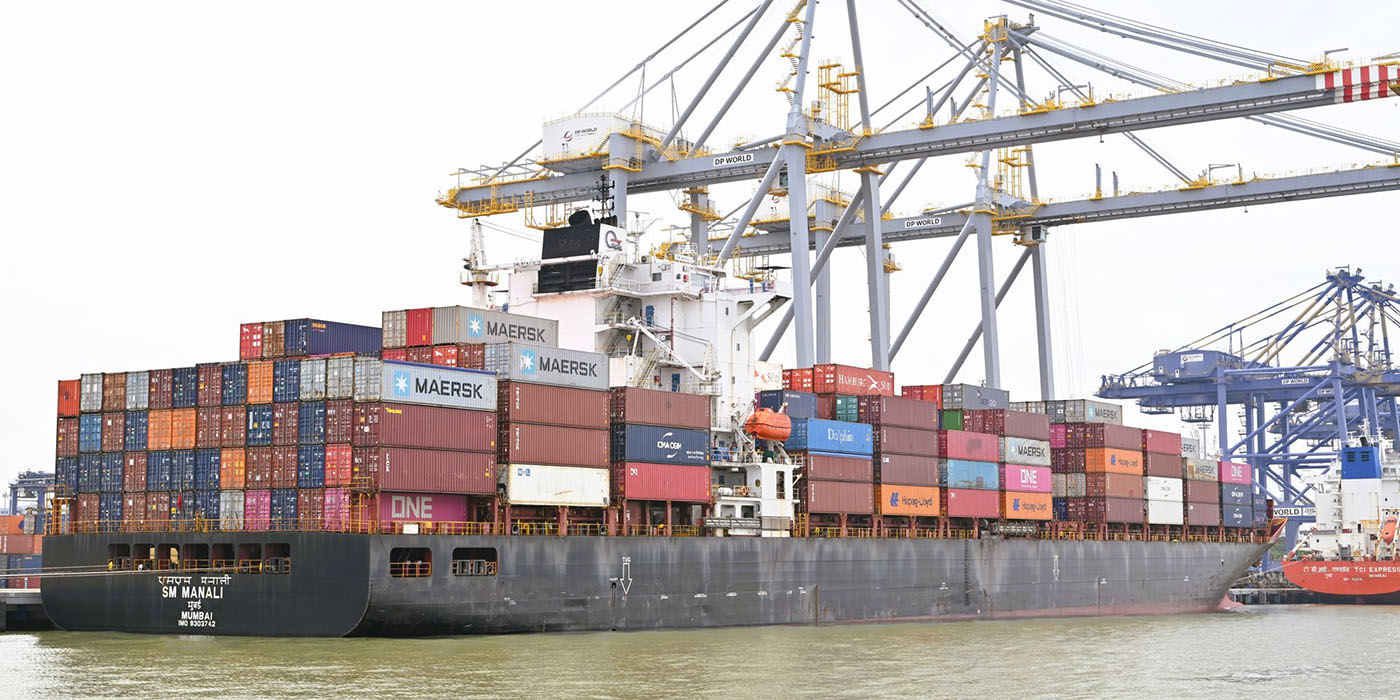
A customer asks whether a container will reach their warehouse on Friday. The tracking screen says the vessel has arrived. It is tempting to answer yes. But arrival is only one point in a journey: the ship may still need a berth, the container may await discharge, and the onward movement may depend on a connection or a collection slot.
Recent operational updates make that distinction useful. Maersk’s IMEA market update, published on 9 November 2026, advises customers to allow time for connections and onward movements and to check shipment-specific arrangements. Its guidance connects ocean planning with inland capacity and delivery feasibility. These are the company’s operational observations and recommendations, not a promise about every shipment. [1]
Kuehne+Nagel’s update covering 11–17 November reports transshipment congestion and missed connections at Colombo, alongside gate, yard and inland-interface pressure at Nhava Sheva. Those observations describe particular places and a particular reporting period. They do not establish today’s status for an individual container or justify adding a fixed delay to every booking. [2]
Separate the milestones before promising a date
For a student, the important concept is that a vessel and its cargo have related but different timelines. For a working logistics executive, the practical task is to identify which timeline the latest update describes. “Arrived” is incomplete unless the location, event and timestamp are clear.
Start with five questions. Has the vessel reached the relevant port location? Has it berthed? Has this container been discharged and become available for its next movement? Have the necessary releases and operational requirements been completed? Has the onward journey actually been arranged?
These are planning questions, not a universal sequence for every shipment. Import collection and transshipment have different requirements. Customs permission, shipping-line release and terminal availability should be checked where applicable; one confirmation should not be treated as proof of all three. A delivery appointment also needs a vehicle, access arrangements and a receiving team.
The APM Terminals Mumbai daily berthing report dated 17 November, available through Jawaharlal Nehru Port Authority, illustrates the separation in operational records. It has distinct fields for arrival, alongside, operations commenced and operations completed, plus expected-vessel information and gate cut-offs. A dated report is useful evidence of how milestones are recorded; it is not a live delivery commitment. [3]
How a twelve-hour delay can lose a week
Consider an invented learning case involving a Kerala exporter of coir products. Its container travels by feeder vessel to an unnamed transshipment hub, where it must connect with a weekly onward sailing. All dates, times and service arrangements below are hypothetical, expressed in the same hub time zone. They are not a real carrier schedule.
The feeder is expected at 18:00 on Monday, 23 November 2026. Assume ten hours are needed after arrival for berthing, discharge and transfer readiness together. The container would therefore be ready at 04:00 on Tuesday, 24 November. Its confirmed connection has a readiness cut-off of 06:00 that Tuesday and departs at 18:00. The original plan leaves only two hours of margin before the cut-off.
Now suppose the feeder arrives twelve hours late, at 06:00 on Tuesday. With the same assumed ten-hour processing interval, readiness moves to 16:00. That is ten hours after the cut-off. Although the onward ship has not yet departed, our example assumes the cut-off is firm and late acceptance is unavailable.
If the next usable sailing leaves at 18:00 on Tuesday, 1 December, the departure shifts by seven days. Assume space is confirmed and every subsequent transit, release and delivery interval remains unchanged: delivery then also shifts by seven days. The original twelve-hour arrival delay has crossed a connection deadline. It cannot be translated into a twelve-hour customer delay.
Real cases require fresh confirmation of processing time, acceptance, space and alternatives. A weekly timetable alone does not guarantee room on the following sailing. The lesson is to test the connection, rather than simply move the delivery date by the vessel’s delay.
Keep a delivery plan with evidence
Use a short milestone record showing the planned time, latest estimate, actual time, information source and person responsible for the next check. Keep the container number and booking reference visible. Record the time zone and when each update was obtained. An old estimate should not silently remain in the same column as a confirmed event.
Work backwards from the customer’s receiving appointment. Check the inland journey, collection availability, required releases and connection cut-offs. Identify the smallest time margin and agree when to escalate it. Compare alternatives with the forwarder before offering them: another service may have different acceptance conditions, costs and delivery arrangements.
Give the customer the useful uncertainty
A helpful update states what is confirmed, what remains open and when the next answer is due. For example: the vessel has arrived; container availability and collection are still being checked; the delivery estimate will be reviewed after those confirmations. That gives sales and the customer a workable next step.
The practical takeaway is simple: confirm the next usable movement before converting a vessel update into a delivery promise. Tracking events become valuable when someone connects them to the remaining work.
Sources and illustrative timeline checked on 21 November 2026.
Sources & further reading
- Maersk: IMEA Market Update — November 2026
Published 9 November 2026. Connection time, ocean/landside coordination and shipment-specific delivery planning; company guidance, not a universal forecast. Read 21 November 2026.
- Kuehne+Nagel: Port operational updates, 11–17 November 2026
Indian Subcontinent section: the company's observations on Colombo connections and Nhava Sheva gate, yard and inland-interface pressure for the stated reporting period. Read 21 November 2026.
- JNPA: APM Terminals Mumbai daily berthing report, 17 November 2026
One-page report: distinct arrival, alongside, operations and expected-vessel/cut-off fields. A historical operational snapshot, not current container availability. PDF read and visually inspected on 21 November 2026.
Put your interest into practice
Explore a relevant programme.
PG Diploma in Logistics & Supply Chain ManagementHave questions? Talk to a programme adviser.